
 Image 1 of 5
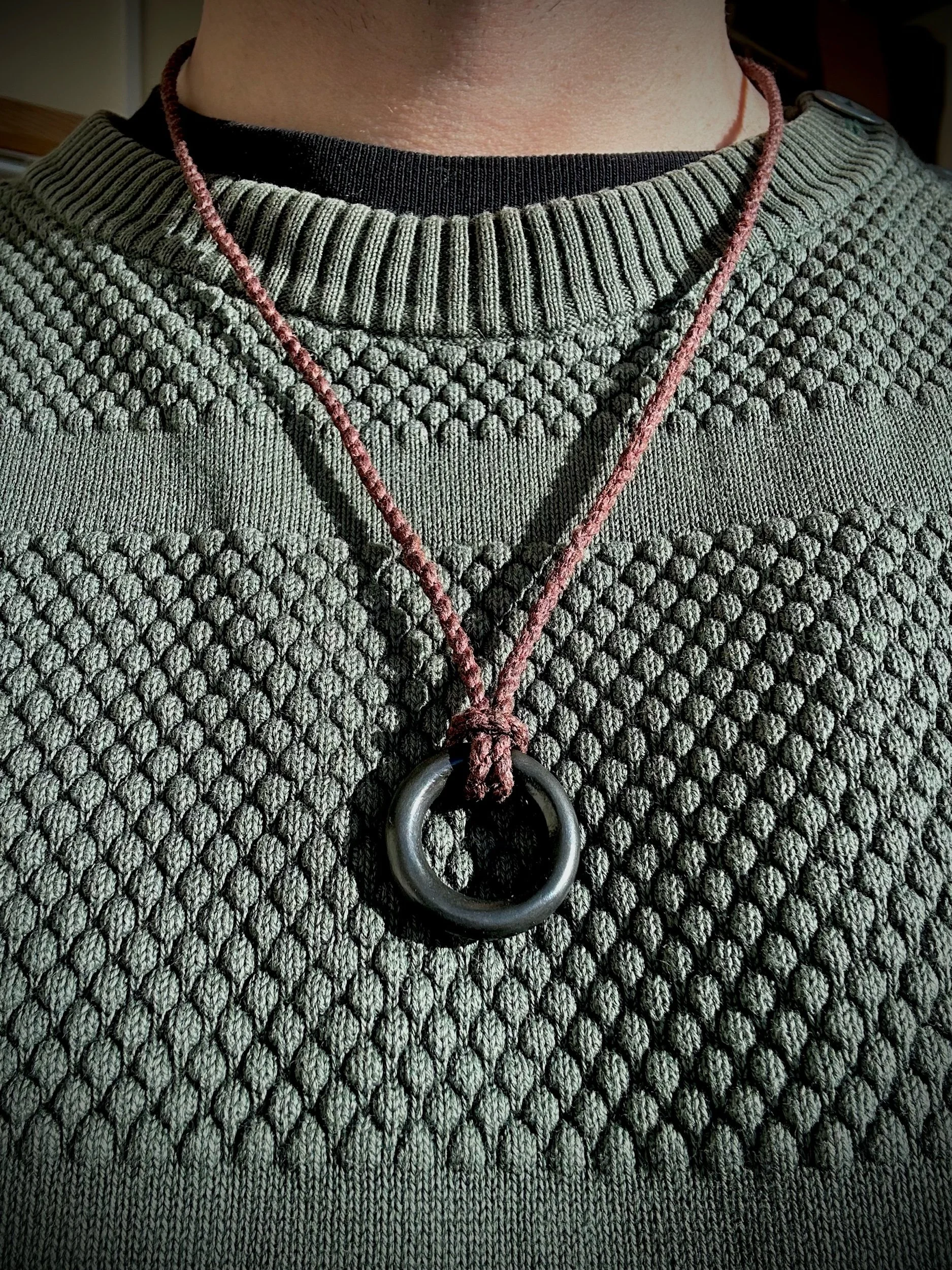 Image 2 of 5
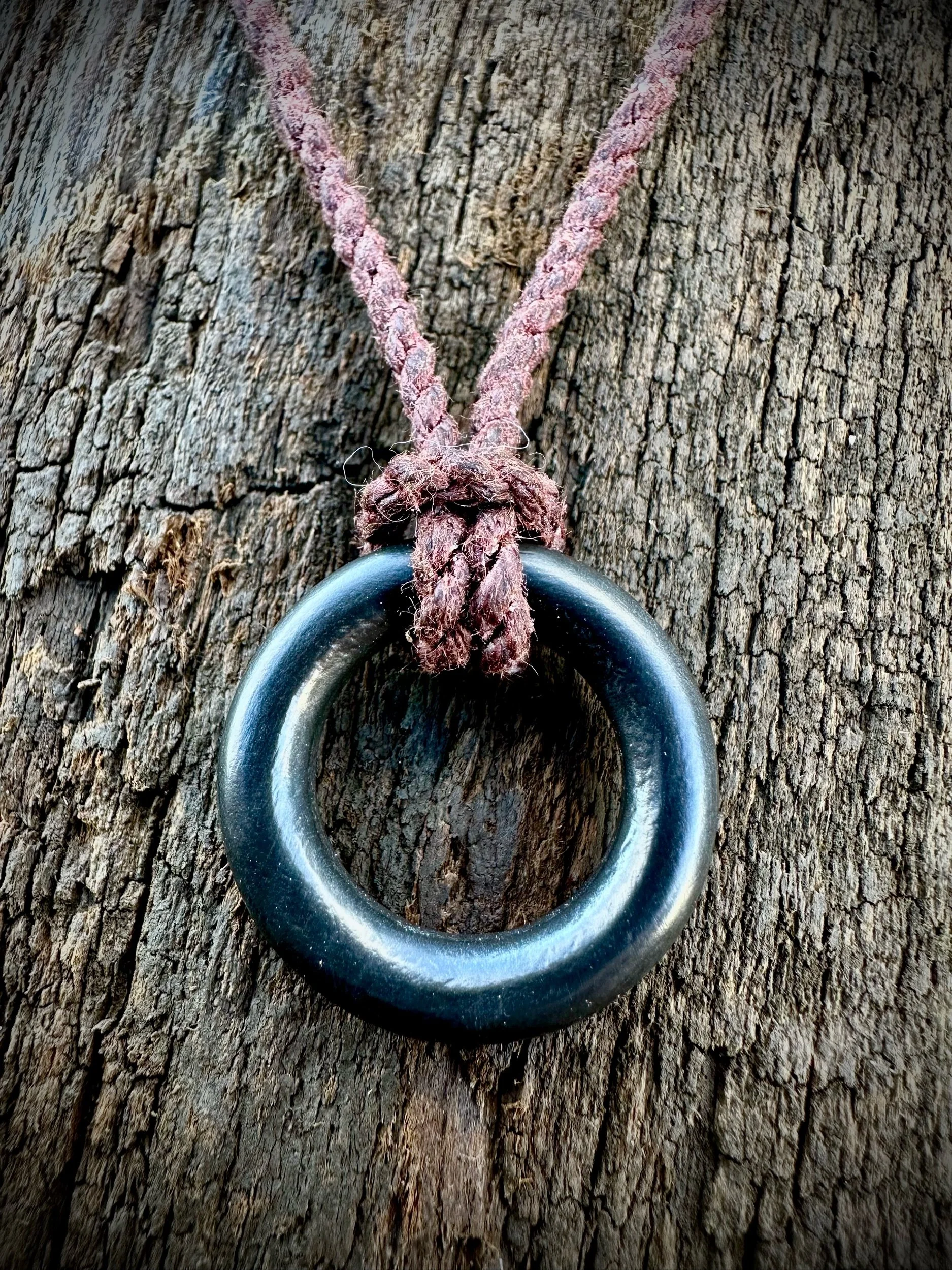 Image 3 of 5
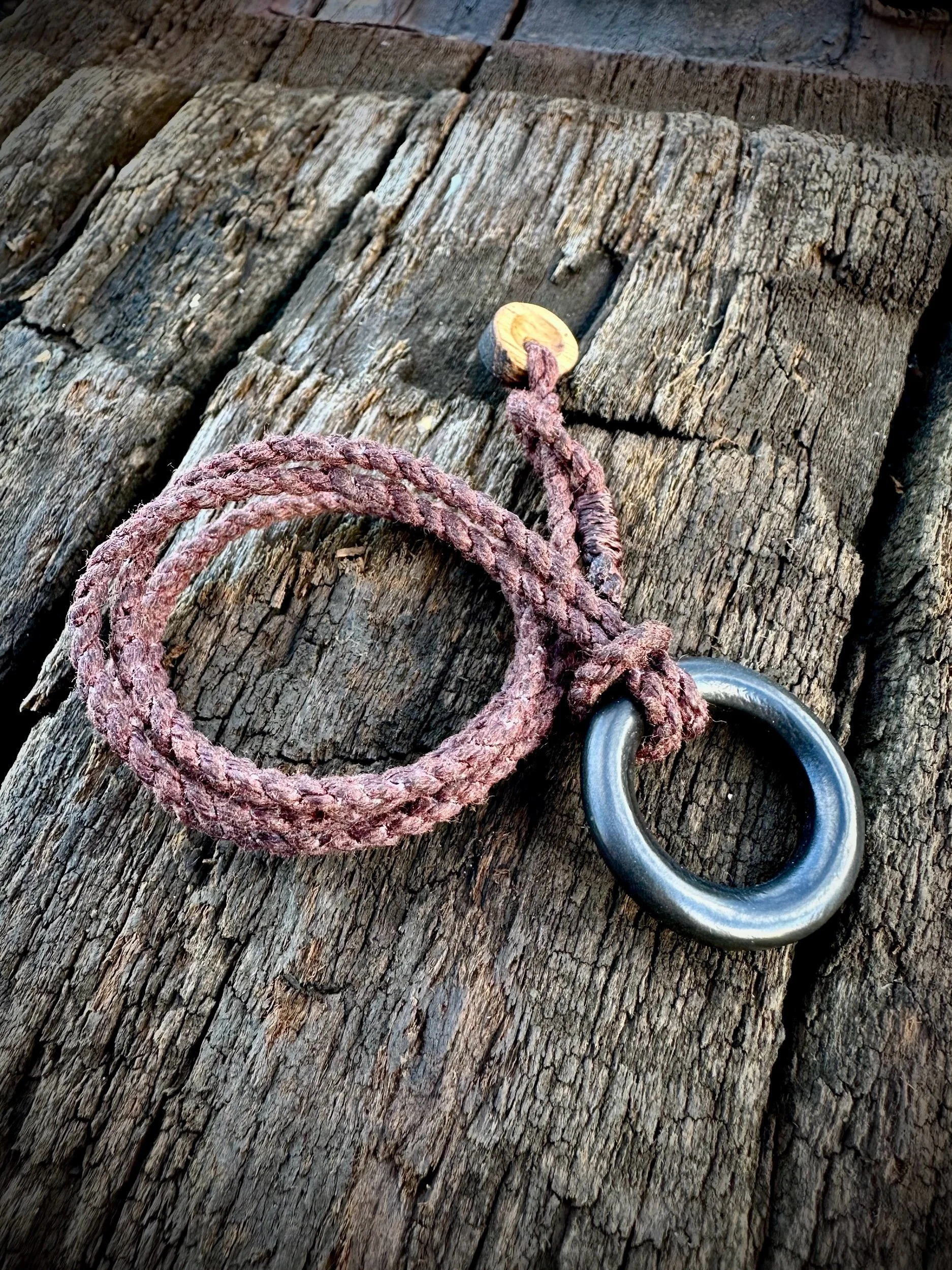 Image 4 of 5
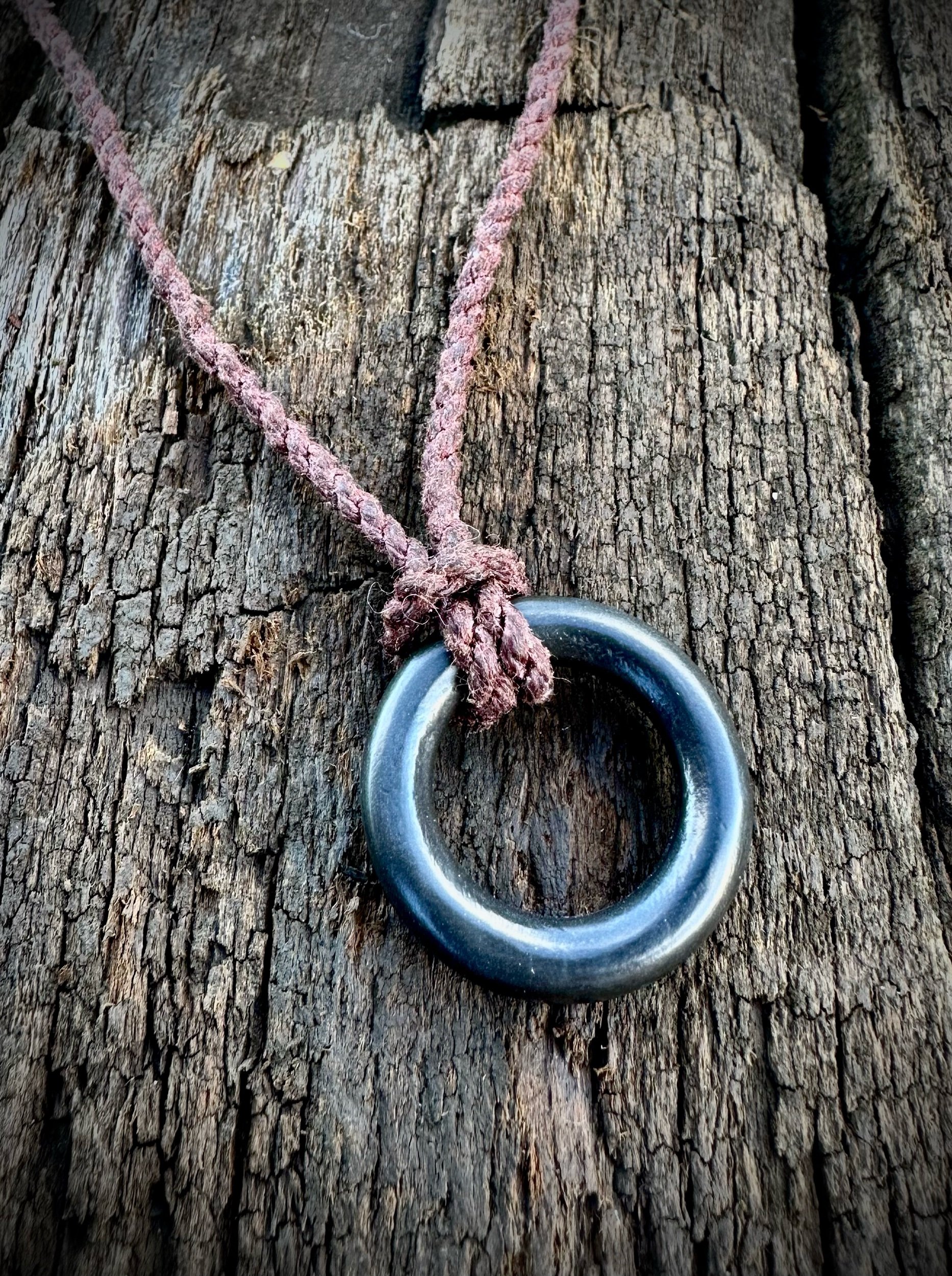 Image 5 of 5
In late Bronze Age Britain (c. 1000-800 BCE), people used small cast bronze rings, often found in hoards, as a form of proto-currency. Their consistent size and weight suggest they served as units of value in trade. These rings also reflect Celtic traditions of ring-shaped oraments. It is thought that these rings were occasionally threaded together and worn as necklaces or attached to clothing/belts as a display of wealth.
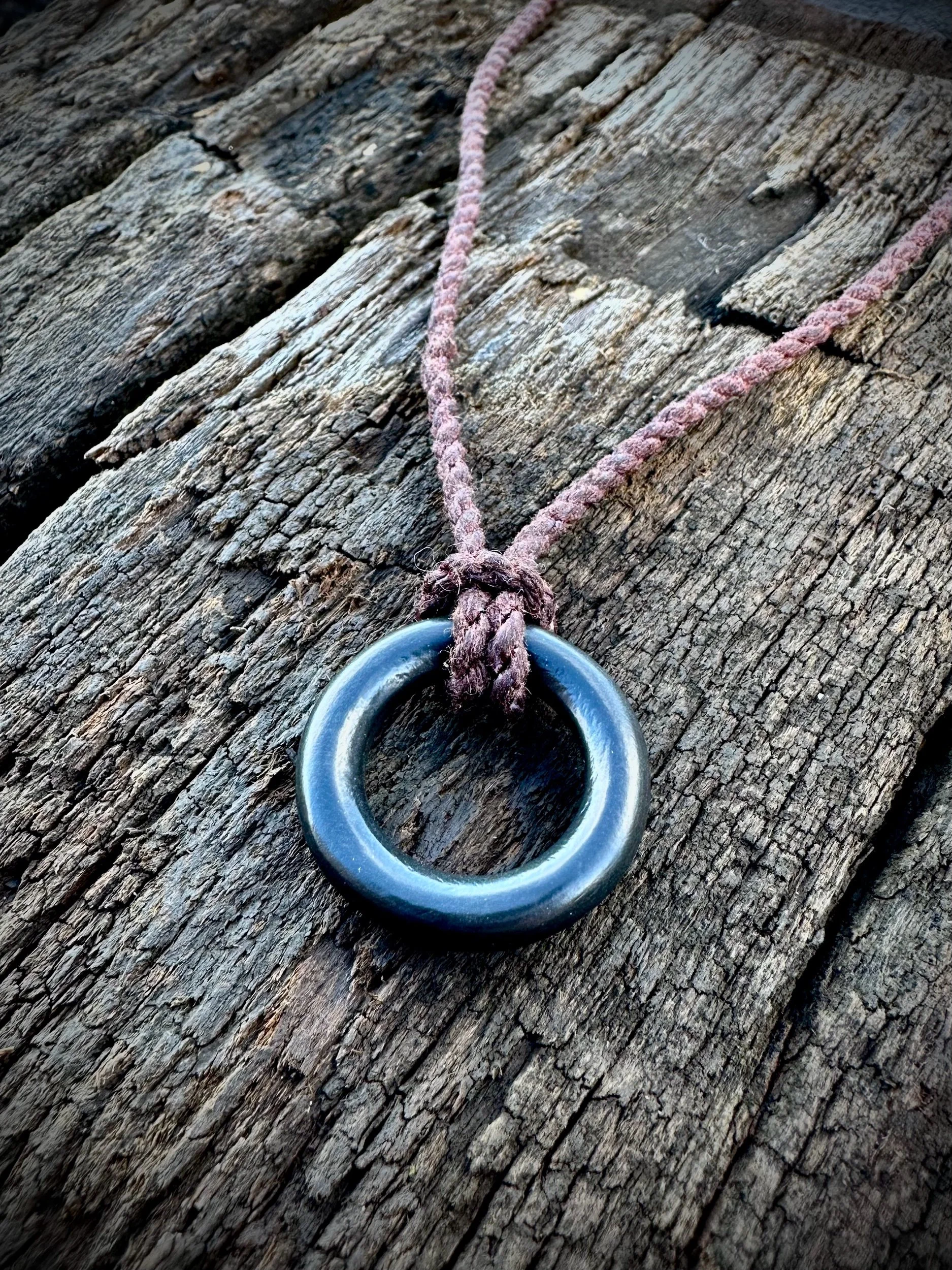
This stone ring is made of Ashford Black Marble - which actually is not a marble but a bituminous limestone found in Derbyshire, England.
This necklace is complete with handmade, naturally stabilised hemp rope cordage and an English oak toggle.
Pendant dimensions:
26mm x 26mm x 5mm
Hang length:
300mm
TULLOS - ‘pierced’, ‘perforated’ or ‘hole’ in Proto-Celtic (reconstructed language)
In late Bronze Age Britain (c. 1000-800 BCE), people used small cast bronze rings, often found in hoards, as a form of proto-currency. Their consistent size and weight suggest they served as units of value in trade. These rings also reflect Celtic traditions of ring-shaped oraments. It is thought that these rings were occasionally threaded together and worn as necklaces or attached to clothing/belts as a display of wealth.
This stone ring is made of Ashford Black Marble - which actually is not a marble but a bituminous limestone found in Derbyshire, England.
This necklace is complete with handmade, naturally stabilised hemp rope cordage and an English oak toggle.
Pendant dimensions:
26mm x 26mm x 5mm
Hang length:
300mm
TULLOS - ‘pierced’, ‘perforated’ or ‘hole’ in Proto-Celtic (reconstructed language)